

Preserving History: How Larry Stark Replicates Cherished Pendants Using Custom Jewelry Molds
There is something profoundly personal about a favorite piece of jewelry. Whether it’s a vintage family heirloom passed down through generations, or a custom-designed piece that marks a major life milestone, jewelry carries our stories.
But what happens when you want to share that story? What if siblings want to share an exact copy of a mother’s beloved pendant, or you want a replica made to protect the original from everyday wear and tear?
At Stark Jewelers in Sacramento, master goldsmith Larry Stark solves this exact dilemma through the meticulous, old-world art of jewelry replication. Today, we’re taking you behind the bench on Fair Oaks Blvd to show you exactly how Larry creates a flawless, high-precision replica of a client's cherished pendant using custom mold-making.
The Art of the Duplicate: Why Make a Jewelry Mold?
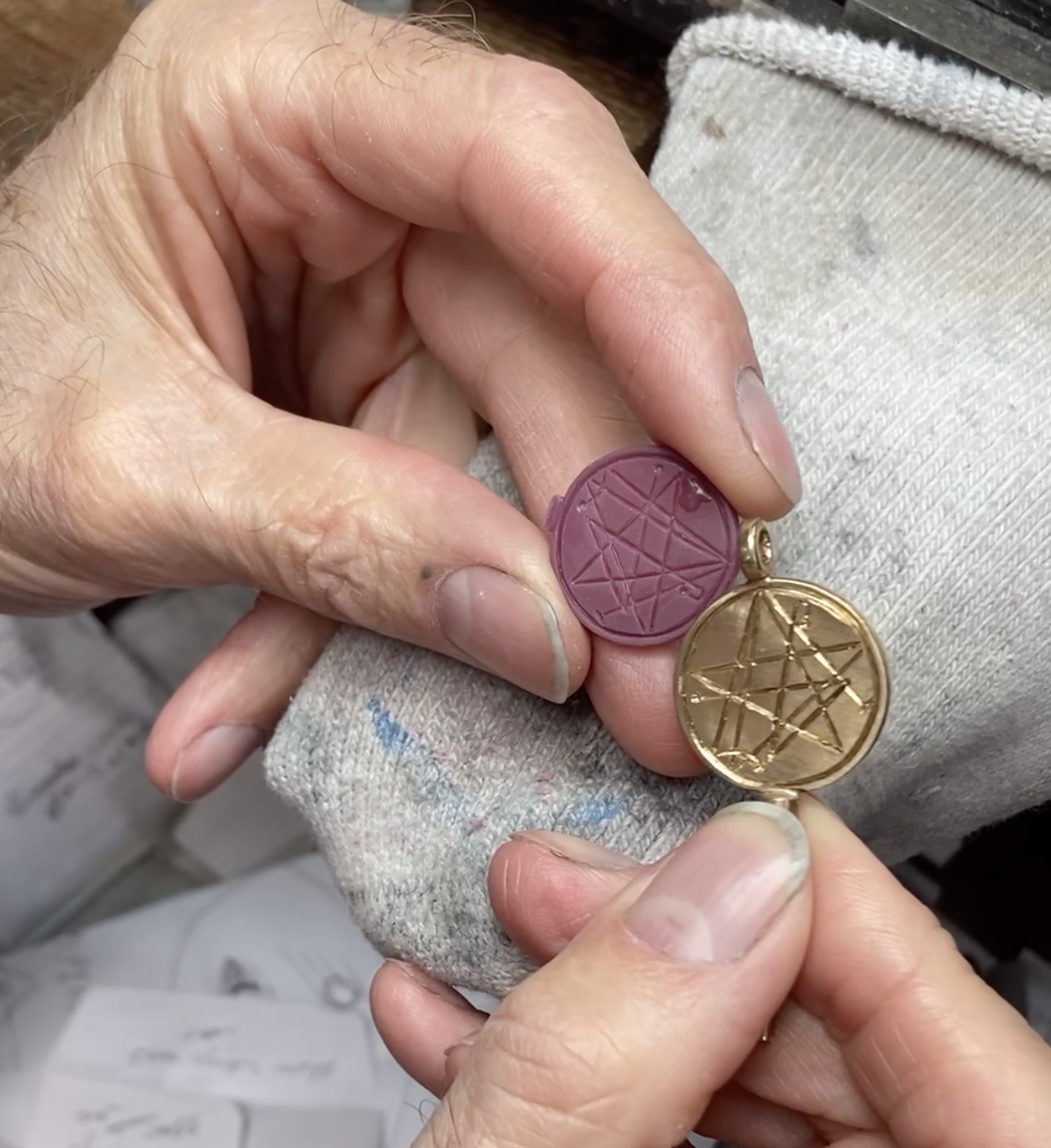
Replicating jewelry by hand from scratch can introduce minor human variances. To get a 100% physically exact twin of an intricate pendant, Larry utilizes silicone or rubber mold-making.
This process creates a perfect negative impression of the original piece, capturing every micro-texture, gemstone setting, and engraving. Once the mold is cured, it can be injected with wax to begin the lost-wax casting process—yielding an exact metallic twin in yellow gold, white gold, platinum, or silver.
Step-by-Step: Larry’s Process for Replicating a Client's Pendant
1. Preparing the Original Piece
Before any silicone touches the jewelry, Larry meticulously cleans and inspects the client's pendant. Any dirt or debris could ruin the mold's texture. He also evaluates how the liquid mold material will flow around the piece to ensure there are no trapped air bubbles.
2. Building the Flask and Pouring the Mold
Larry secures the pendant inside a specialized mold framework (or flask). Depending on the fragility and design of the piece, he selects a high-tier liquid silicone or a heat-vulcanized rubber. The liquid is carefully poured over the pendant, ensuring total coverage.
3. The Degassing Phase
To ensure the replica is flawlessly smooth, Larry uses a vacuum degasser to pull all microscopic air bubbles out of the liquid silicone before it cures. Even a single air bubble could result in an unwanted metal bump on the final replica.
4. The Delicate Cut
Once cured, the liquid turns into a firm, flexible block. This is where Larry’s 45+ years of master craftsmanship truly shine. Using a razor-sharp surgical scalpel, he hand-cuts the mold in a wavy, precise pattern to release the original pendant. The cut must be perfectly calculated so the two halves interlock seamlessly for future wax injections.
5. Wax Injection and Lost-Wax Casting
With the perfect negative mold complete, Larry injects hot jewelry wax into the cavity. The wax replica is pulled out, embedded in an investment plaster, and placed in the kiln. The wax melts away (hence "lost wax"), leaving a perfect cavity ready to be cast with molten precious metal.
Bringing Your Jewelry Ideas to Life in Sacramento
Whether you are looking to replicate a family heirloom so multiple family members can wear it, or you want to transform a vintage design into something uniquely yours, Stark Jewelers blends museum-quality artistry with modern technical expertise.
Conveniently located right next to Ettore’s Bakery on Fair Oaks Blvd, Larry Stark has spent over three decades providing Sacramento, Roseville, and Elk Grove residents with unmatched jewelry restoration and custom design.
stark jewelers
Want to replicate a special piece of your own? Stop by the studio or book a personalized consultation with Larry today. Let’s keep your jewelry's story alive for generations to come.